Calling all tristate area worm scientists!

Are you a worm scientist in the PA/NJ/DE tristate area (or within driving distance of West Chester, PA)? Are you looking for ways to engage with the public about your research?

Join us this August 9th for WormCon, a one-day science outreach event designed to create conversations about the value of fundamental research – and give us a chance to hone our science communications skills!

We are looking for worm scientists to:

  • Present a poster that communicates the value and excitement of your research to the public
  • Lead an interactive demo, hands-on activity, game, or craft
  • Present a poster or short talk about science “behind the scenes” (how do grants work, pathways to becoming a scientist, peer review, etc)
  • Participate in a Q&A panel or informal table discussions

Sign up below to let us know if you are interested!

Nematode Hunters at the 25th International Worm Meeting!

The Nematode Hunters team are excited to be traveling to Davis, California where we will be sharing our latest results with worm researchers from all over the world at the 25th International Worm Meeting!

Presentations will include:

“Nematode Hunters: CUREing Intracellular Infections” by Dr. Jessica Sowa. Plenary Session I, 7:44-7:56pm Saturday, June 28th, 2025

“Novel infection by Mucor hiemalis kills Caenorhabditis hosts through intestinal perforation” by Jay Ni. Poster #247B Cell Biology Poster Session, 7:30-10:30pm, Monday, June 30th, 2025

“The effect of Orsay infection and its variants on the fertility of C. elegans” by Carolynn O’Donnell. Poster #919B Physiology Poster Session, 7:30-10:30pm, Monday, June 30th

Nematodes received from Lionville Elementary!

Cheers to our nematode hunters at Lionville Elementary! Thanks to your hard work we have lots of new strains of nematodes to study!

How many nematodes did Lionville find?

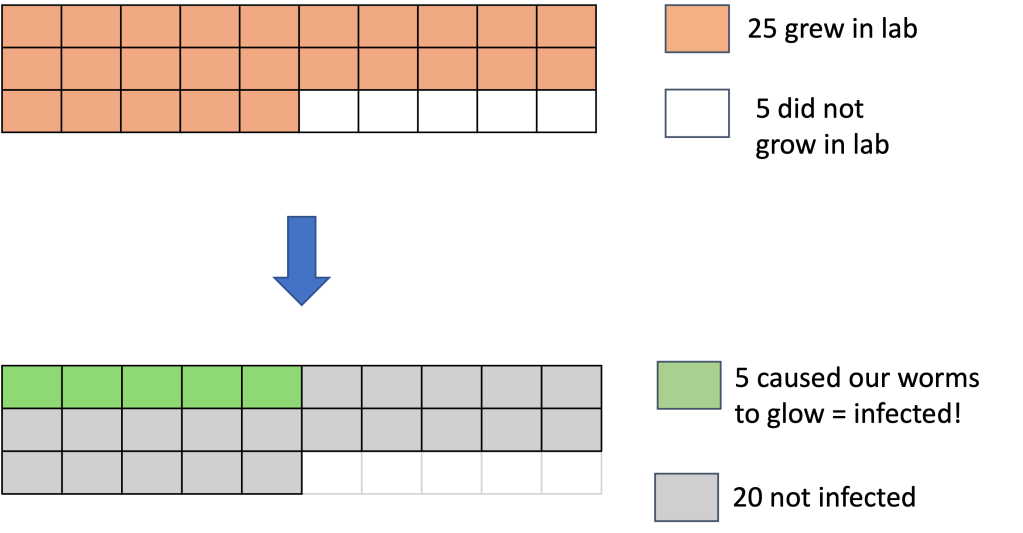
  • Our nematode hunters at Lionville Elementary sent us 30 plates of nematodes!
  • Of those 30, we were able to get 25 to grow for us in the lab
  • Of those 25, 5 showed signs of infection in our tests!

How do we know if the nematodes are infected?

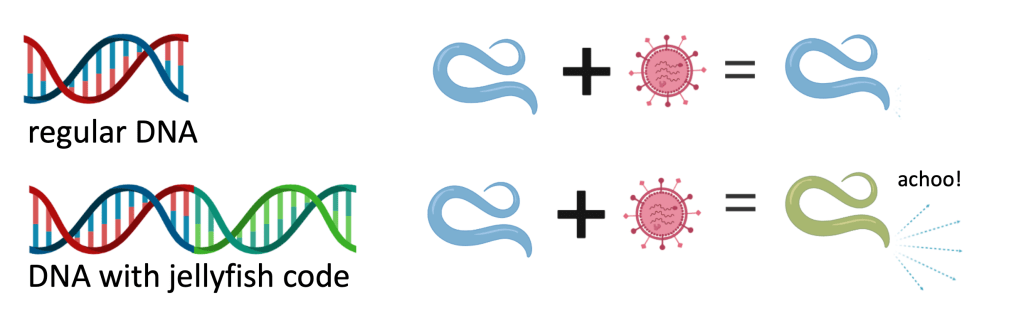
The secret is in their DNA! In our lab we have special nematodes that have been genetically engineered – that means we have changed their DNA. Your DNA is like a blueprint that tells your body how to look and how to work.

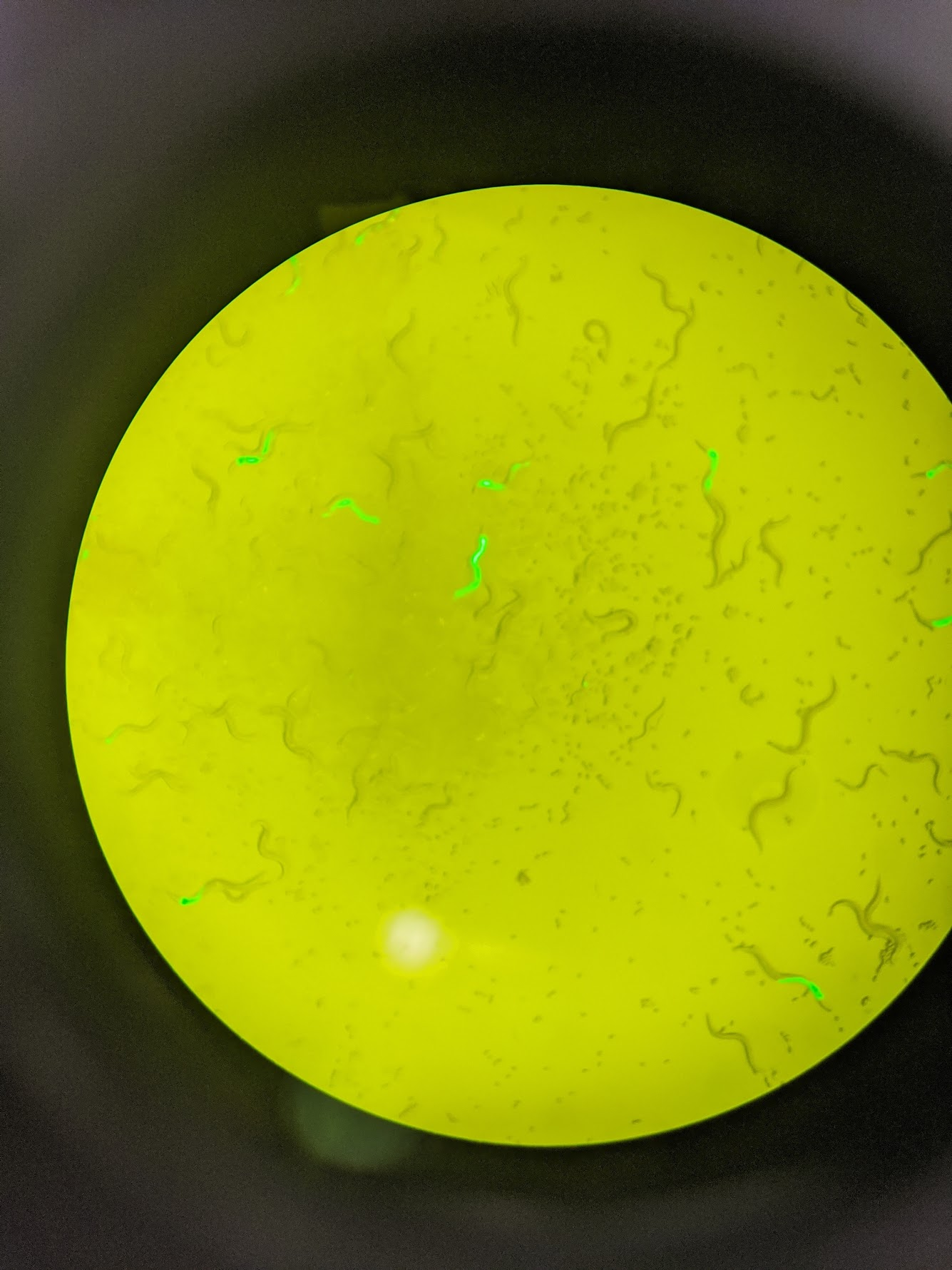
For these nematodes, we have taken a piece of DNA from a type of jellyfish that naturally glow green and added it into our nematodes. We put the jellyfish DNA right next to the part of the nematode’s DNA that tells their body what to do when they are sick – so now when they are feeling sick they start to glow!

To see if the wild nematodes sent in have any infections, we mix them together with the special genetically engineered nematodes. If the special nematodes catch any infections from the wild ones, they will start to glow!

Thanks Lionville nematode hunters! We are excited to keep studying the nematodes you sent and learn more about what kind of infections they carry!

Nematode Hunters at #TAGC2024

Dr. Sowa and several members of the Nematode Hunters team will be traveling this March to The Allied Genetics Conference 2024 in Washington, D.C. to present the results of our studies!

177: Nematode Hunters: an integrated approach combining science outreach, course-based undergraduate research, and mentored research to identify novel nematode viruses

Presented by: Dr. Sowa

1572S: How do the Orsay virus and its variants affect the Intracellular Pathogen Response in C. elegans?

Presented by: Abigail Reese

1573S: Variation in Orsay virus affects progeny numbers of C. elegans

Presented by: Solon Aguila

Come see us there and hear the latest results from the Nematode Hunters project!

Infection transmission from JNS_10!

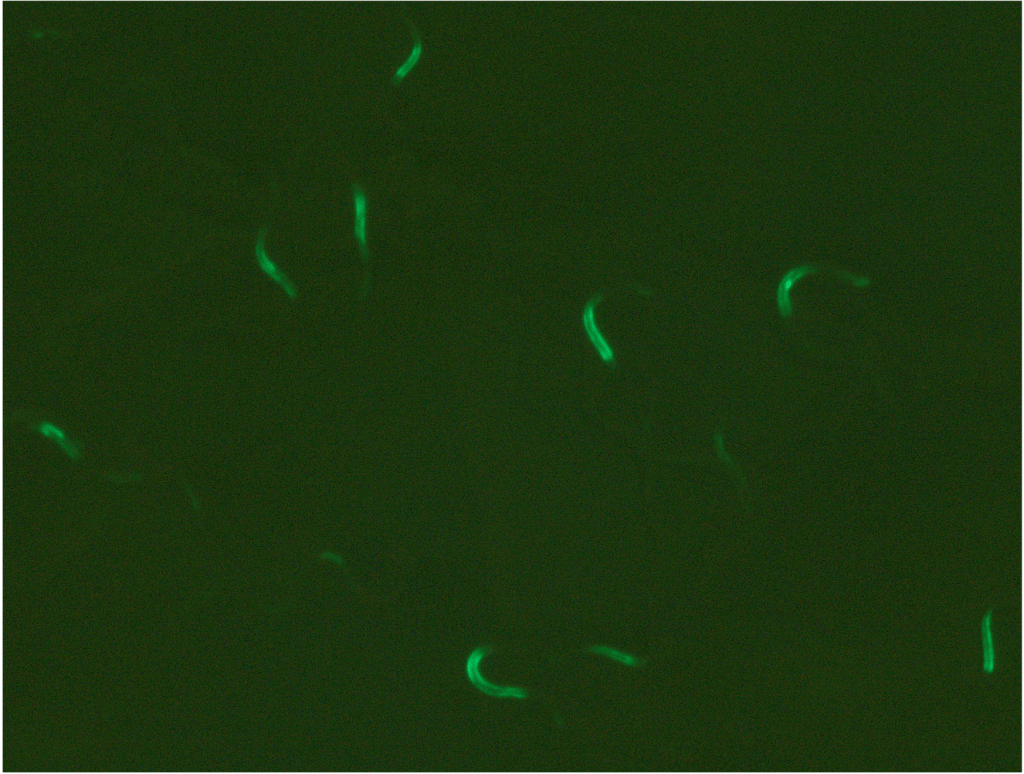
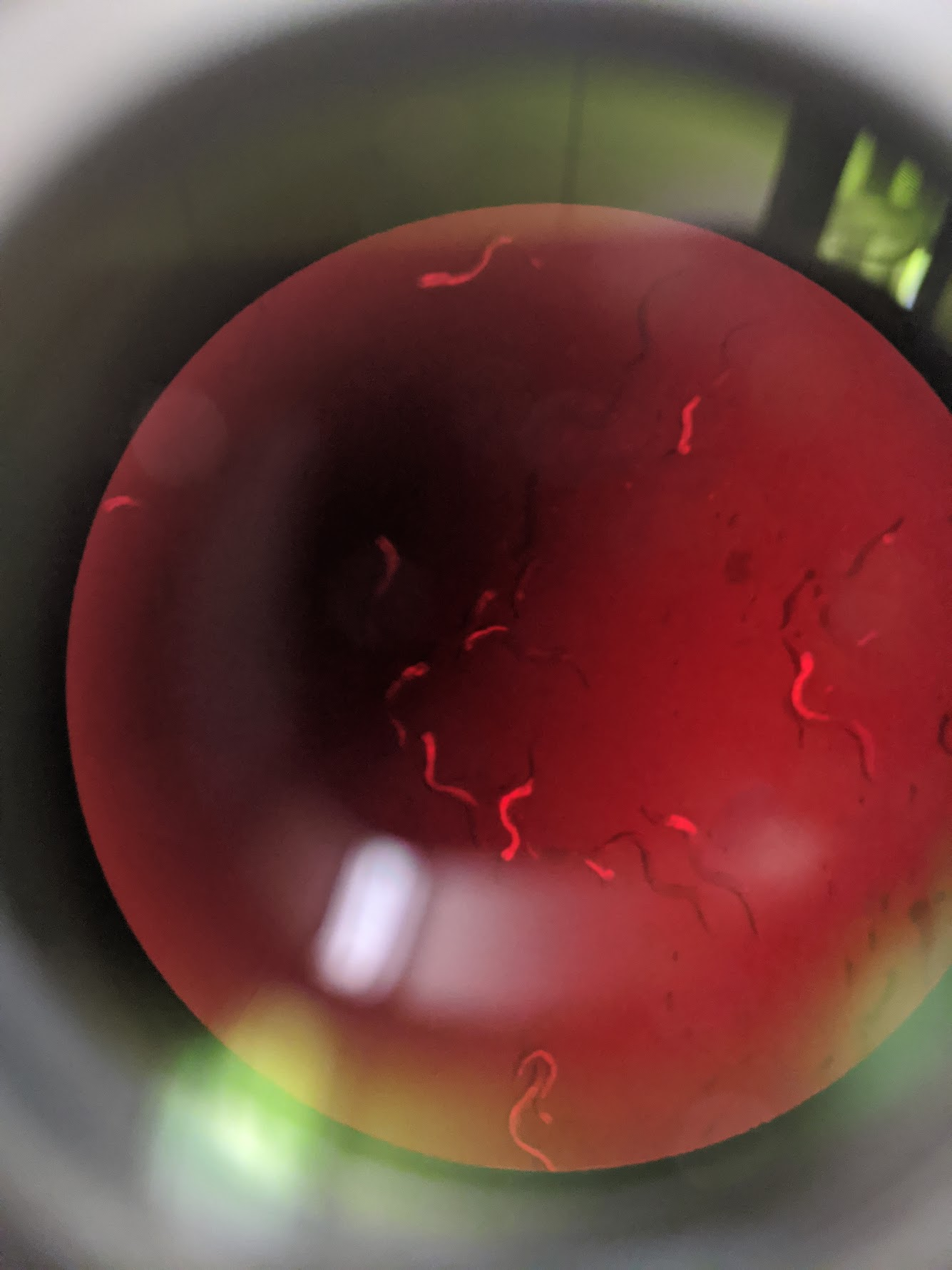
We have observed IPR reporter fluorescence in reporter C. elegans co-cultured with the wild isolate JNS_10! JNS_10 was isolated from a mutsu apple found at Highland Orchards in West Chester, PA.

The reporter appears to be expressed in intestine on the side closest to the head. The next step will be to test whether this infection can be transmitted through a filtrate!